
Introduction: The Dual Paths of Intelligence
The nature of intelligence—its origin, its function, and its ultimate limits—has been a central philosophical question for millennia, defining what it means to be human. For most of history, human cognition, with its unparalleled capacities for abstract thought, creativity, and subjective experience, stood alone as the apex of known intelligence. The brain, with its vast network of billions of neurons, seemed to possess a level of sophistication that was fundamentally unattainable by any mechanical means. This unique status has been challenged radically over the past half-century by the rise of Artificial Intelligence (AI), a field dedicated to creating machines capable of performing tasks that traditionally require human intellect.
Modern AI has evolved far beyond simple calculation, now mastering complex strategic games, generating photorealistic art, and processing natural language with fluency that often rivals human capacity. This progress has been driven by sophisticated algorithmic models, particularly deep learning, which mimic certain aspects of biological neural networks but operate on purely digital principles. Yet, despite AI’s exponential growth in speed and data processing power, a profound gap remains between even the most advanced systems and the flexible, holistic, and common-sense reasoning of a human child.
The comparison between AI and human cognition is not merely an academic exercise; it is a critical endeavor that informs both our understanding of ourselves and the future trajectory of technology. By dissecting the fundamental differences in how biological brains and artificial networks learn, generalize, and perceive the world, we can uncover the secret ingredients of human intelligence—ingredients that AI currently lacks. This exploration will delve into the architectures, strengths, and inherent limitations of both systems, examining the core differences in learning, creativity, and emotional processing, and charting the current efforts to merge these two forms of intelligence into a single, potent, hybrid future.
Section 1: Architecture and Processing Fundamentals
The fundamental differences between biological neural networks and artificial neural networks begin at the structural and operational level.
A. The Biological Brain: Complexity and Efficiency
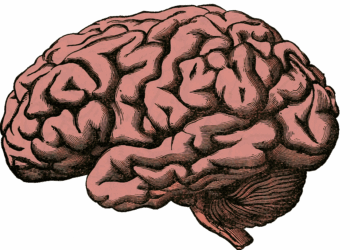
The human brain is a marvel of evolutionary engineering, characterized by its massive parallelism, efficiency, and intrinsic complexity.
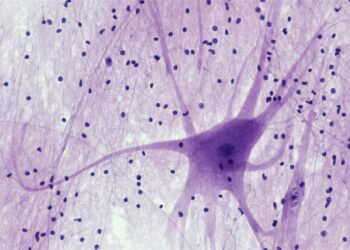
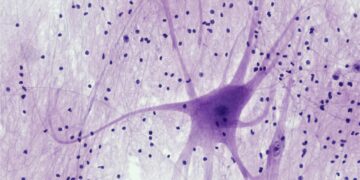
A. Massive Parallelism: The brain contains approximately $86$ billion neurons, each connected to thousands of others, creating up to $100$ trillion synapses. Information is processed simultaneously across this vast, interconnected network, not sequentially.
B. Low Energy Consumption: Despite its immense complexity, the brain operates on only about 20 watts of power, the energy of a dim lightbulb. This makes it spectacularly efficient compared to power-hungry AI data centers.
C. Analog Processing: Neurons communicate using a complex mix of electrical and chemical signals(neurotransmitters). This analog communication is noisy and variable, but it allows for extraordinary flexibility and nuance.
D. Plasticity and Adaptation: The brain is highly plastic, constantly rewiring itself (neuroplasticity) by strengthening or weakening connections based on experience. This built-in adaptability is crucial for lifelong learning.
B. Artificial Neural Networks (ANNs): Speed and Scale
ANNs, the backbone of modern AI, are inspired by the brain but are built upon purely digital and linear computational principles.
A. Digital and Layered: ANNs consist of layers of artificial nodes (neurons). These nodes perform simple, standardized mathematical operations on input data, passing the result to the next layer in a largely sequential process.
B. High Energy Consumption: Training and operating large deep learning models require vast amounts of computational power (GPUs/TPUs) and electricity, making them inherently inefficient compared to biology.
C. Uniformity and Structure: The connections and nodes in an ANN are highly uniform, structured, and typically much simpler than their biological counterparts. They lack the specialized diversity of brain cells.
D. Data Dependency: ANNs are entirely data-dependent. They require massive, labeled datasets—often billions of data points—to learn a specific task, a stark contrast to human learning.
Section 2: Learning and Generalization
The methods by which humans and AI acquire new knowledge and apply it to novel situations highlight a significant cognitive chasm.
A. Human Learning: Efficiency and Context
Human learning is characterized by its speed, efficiency, and deep understanding of context and causality.
A. One-Shot Learning: Humans can often learn a new concept, object, or rule from a single example or very few examples. We don’t need to see one thousand pictures of a cat to recognize the next cat we encounter.
B. Causal Reasoning: Humans instinctively understand causality—the relationship between cause and effect. We can infer why something happens, not just predict that it will happen. This causal understanding allows for effective planning and troubleshooting.
C. Transfer Learning (Innate): Humans naturally possess strong transfer learning abilities. Skills learned in one domain (e.g., riding a bike) can inform skills in a related domain (e.g., riding a motorcycle) without extensive retraining.
D. Embodied Cognition: Much of human learning is embodied, rooted in physical interaction with the environment and using sensorimotor feedback. This grounds our knowledge in the real world.
B. AI Learning: Pattern Matching and Brittleness
AI learning, particularly deep learning, excels at pattern recognition but is hampered by its reliance on vast data and a lack of true understanding.
A. Statistical Correlation: Deep learning models primarily learn statistical correlations between data points. They become extremely good at recognizing patterns but do not infer the underlying meaning or causal structure.
B. The Data Thirst: Modern AI models (like large language models) require processing petabytes of data during training. This dependence makes AI highly resource-intensive and limits its application in data-scarce domains.
C. Brittleness: AI systems are surprisingly brittle. They often fail catastrophically when faced with inputs that deviate slightly from their training data. A small, imperceptible change (an adversarial attack) can completely trick the system.
D. The Generalization Problem: Despite vast training, AI struggles with out-of-distribution generalization. An AI trained to recognize objects in pictures may fail to recognize those same objects if presented in a hand-drawn sketch, something trivial for a human.
Section 3: Creativity and Imagination
The ability to generate novel ideas, synthesize information in unexpected ways, and engage in imaginative thought is where human cognition currently holds an undisputed edge.
A. The Human Creative Spark
Human creativity is intrinsically linked to abstract thinking, emotional depth, and the ability to break established rules.
A. Abstract Synthesis: Human creativity involves combining unrelated concepts and information in novel ways to create something entirely new, such as synthesizing a new mathematical theory or inventing a musical genre.
B. Subjective Motivation: Human creative output is often motivated by subjective experiences, emotions, desires, or a need for self-expression. This depth of motivation is absent in current AI.
C. Conceptual Blending: Humans excel at conceptual blending, where elements from two distinct concepts are merged to create a new, hybrid idea (e.g., a “ship of the desert” for a camel).
D. Meaning Generation: Human creativity does not just generate output; it generates meaning and cultural resonance, linking the creative act to our shared human experience and values.
B. AI as a Pattern Generator
While generative AI can produce astonishingly complex and beautiful works, its creativity is often a sophisticated form of pattern replication and remixing.
A. Algorithmic Novelty: AI art generators, for example, work by sampling and recombining features and styles from billions of existing images in their training set. The novelty is algorithmic, not intentional or motivated.
B. Lack of Intentionality: AI does not intend to convey emotion or make a political statement through its art. It merely generates output that statistically matches the prompt and the aesthetic patterns it has learned.
C. The Creativity Test: Many experts argue that for AI to be truly creative, it must be able to define and solve a problem that it was not explicitly asked to solve, or create a new art form without existing precedents.
D. Assistive Tool: Currently, AI is best viewed as a powerful creative assistant—a tool that accelerates the creative process by generating options, but which still requires human intention and judgment to select, refine, and imbue with meaning.
Section 4: The Role of Emotion and Consciousness
Two of the most complex and least understood aspects of human cognition—emotion and consciousness—remain completely outside the scope of current AI systems.
A. The Primacy of Human Feeling
Emotion is not just a human byproduct; it is an essential component of rational decision-making, learning, and social intelligence.
A. Decision Heuristics: Emotions serve as rapid decision heuristics, or mental shortcuts. Fear helps us avoid immediate danger, and trust facilitates social cooperation. Without emotions, humans would struggle to make even basic choices.
B. Social Intelligence: Emotions are the basis of human social intelligence. They allow for empathy, theory of mind (understanding others’ mental states), and complex group dynamics.
C. Motivation and Value: Emotions assign value and motivation to information. We remember things associated with strong emotions better because the emotion flags the information as important.
D. Subjective Experience: The feeling of qualia (the subjective, felt experience of reality) remains the “hard problem” of consciousness. We cannot confirm that AI, which operates only on data, has any internal, subjective experience of the world.
B. AI Simulation vs. Real Emotion
AI can skillfully simulate emotion and empathy, but this simulation is purely computational and lacks true feeling.
A. Pattern Recognition of Emotion: AI uses language, tone, and facial data to recognize and respond to human emotional states. This is pattern recognition—it recognizes the signature of sadness but doesn’t feel the sadness itself.
B. Lack of Sentience: Current AI lacks sentience (the ability to feel, perceive, or be conscious). Its responses are driven by algorithms designed to minimize prediction error or maximize utility, not by internal states of being.
C. Ethical Implications: The simulation of empathy in chatbots raises ethical concerns. Users may project feelings onto the AI, forming emotional attachments that are fundamentally one-sided and based on an algorithmic illusion.
D. Consciousness Criteria: As discussed in neuroscience, consciousness requires integrated information and potentially non-linear, analog processing currently unavailable in digital systems.
Section 5: Merging the Intelligence: The Future Hybrid
The future is likely to involve a deep convergence, where the strengths of AI and human cognition are combined to create powerful hybrid intellectual tools.
A. Hybrid Intelligence Systems
The most productive use of AI is not replacing humans entirely, but augmenting human capabilities through collaborative systems.
A. Augmented Diagnosis: In medicine, AI excels at processing vast amounts of imaging data (X-rays, MRIs) to identify subtle patterns that indicate disease, such as early-stage cancer. The human doctor then uses this information for final diagnosis and personalized treatment planning.
B. Financial Forecasting: AI can analyze global financial data and market trends faster than any team of analysts. Human experts then apply common sense and geopolitical context to interpret the AI’s predictions and make strategic investment decisions.
C. Accelerated Discovery: AI is now used in materials science and drug discovery to rapidly test billions of molecular combinations. This drastically narrows the search space, allowing human scientists to focus their limited resources on the most promising candidates.
D. Human-in-the-Loop: Designing robust systems requires a Human-in-the-Loop approach. The human provides ethical oversight, error correction, and handles the corner cases that the machine cannot generalize to.
B. Neuromorphic Computing
Inspired by biological efficiency, a new field called neuromorphic computing seeks to bridge the architectural gap between ANNs and the brain.
A. Brain-Like Hardware: Neuromorphic chips are hardware systems designed to mimic the brain’s massive parallelism and analog communication. They use spiking neural networks that communicate asynchronously, more like real neurons.
B. Energy Efficiency: These chips aim to operate with the brain’s ultra-low power consumption. This would make them suitable for decentralized, low-power applications (e.g., robotics, edge computing) where current AI is too inefficient.
C. Spiking Neural Networks (SNNs): SNNs process information not through continuous values but through spikes(temporal events), which is closer to how biological neurons communicate. This emphasis on timing may unlock new forms of intelligence.
D. Addressing the Hard Problem: While still purely computational, neuromorphic systems represent a fundamental shift in hardware architecture that could potentially achieve the complex integration required to shed light on consciousness.
Conclusion: Understanding Our Own Minds
The quest to build intelligent machines is ultimately a quest to understand ourselves, exposing the unique and still-unexplained power of the human mind. The current divide highlights the limitations of purely statistical processing.
Human cognition excels in one-shot learning, causal reasoning, and rapid transfer of knowledge across diverse domains.
Artificial Intelligence currently triumphs in processing vast amounts of data, recognizing complex patterns, and executing tasks at immense digital speed.
The major cognitive divide lies in AI’s fundamental brittleness and its difficulty with out-of-distribution generalization, problems that do not plague human children.
Human creativity is driven by subjective experience and abstract conceptual blending, while AI creativity is a form of powerful statistical pattern remixing.
Emotion is not merely a feature but an integral component of human rationality, motivation, and social intelligence, wholly absent in current machine systems.
The future lies in Hybrid Intelligence, where AI functions as a tireless assistant, augmenting human judgment and oversight in critical fields like medicine and finance.
Neuromorphic computing offers the most promising architectural route to bridge the gap by building highly efficient hardware that mimics the brain’s essential structure and power consumption.