
Introduction: The Thresholds of No Return
The Earth’s climate system is not a linear, predictable machine where cause and effect are always proportional. For decades, climate science focused primarily on the gradual, incremental warming caused by rising greenhouse gas concentrations, predicting steady rises in sea level and temperature. This simplified view, however, overlooked the profound danger posed by the climate system’s inherent capacity for sudden, non-linear change. Hidden within the complex web of planetary processes—spanning ice sheets, ocean currents, and terrestrial biomes—are critical thresholds known as Tipping Points. These points represent the limits beyond which a small, additional change in forcing (like a slight temperature rise) can trigger a massive, self-sustaining, and often irreversible shift in a major component of the climate system.
Once a tipping point is crossed, the affected system enters a new stable state, often one dramatically different from its previous condition, with cascading effects across the globe. For instance, the melting of a large ice sheet, once initiated past its threshold, can become unstoppable even if global temperatures stabilize, leading to meters of unavoidable sea-level rise over centuries. The gravity of these tipping points lies in their irreversibility on human timescales. Crossing these thresholds means committing the planet to environmental changes that future generations will simply have to adapt to, rather than prevent.
The very existence of these tipping points complicates climate mitigation efforts, as they impose an absolute deadline for reducing emissions far stricter than any timeline suggested by linear modeling alone. Scientists are now racing to identify these thresholds and understand the complex interactions between them, recognizing that the collapse of one system, such as the Amazon rainforest, could destabilize another, like the Atlantic circulation. This comprehensive exploration will delve into the concept of climate tipping points, examine the most critical systems currently at risk, detail the non-linear mechanisms that drive these irreversible shifts, and discuss the profound policy implications of managing an increasingly volatile planetary environment.
Section 1: Defining the Tipping Point Concept
The idea of a “tipping point” draws heavily on complex systems theory. It describes a sudden, profound shift in the state of a large system.
A. Non-Linear Change
A climate tipping point represents a transition that is not gradual, but rather abrupt and often unexpected. It is a qualitative change in the system’s underlying behavior.
A. Threshold Behavior: The system exhibits threshold behavior. This means it can absorb small changes up to a certain critical limit without showing significant external impact. Beyond that exact point, the system rapidly and forcefully flips into a new state.
B. Positive Feedback Loops: Tipping points are fundamentally driven by positive feedback loops. These are mechanisms where the output of a system, such as warming, feeds back to strongly amplify the original process, accelerating the change until it becomes self-sustaining and independent of the initial trigger.
C. Irreversibility: Once the tipping point is crossed, returning the system to its previous state is extremely difficult. It often requires reversing the forcing, for example by cooling the planet, to a level far below the original threshold, a concept known as hysteresis. This makes the resulting change practically permanent on the timescale of human civilizations.
B. Cascading Risk
The Earth’s climate is a vast, interconnected network. This interconnectedness means the collapse of one tipping element can rapidly destabilize others.
A. Interconnected Systems: Tipping elements are not isolated components. The substantial melting of the Greenland Ice Sheet, for example, injects massive amounts of freshwater directly into the North Atlantic. This change in salinity and density can directly interfere with the Atlantic Meridional Overturning Circulation (AMOC).
B. Domino Effect: Scientists fear a severe domino effect scenario. Here, the initial tipping of one major element, like the Amazon dieback, triggers a sudden cascade that pushes several other linked elements past their own critical thresholds. This could potentially lead to a complete, irreversible shift in the Earth’s climate state.
C. Global Consequences: Since these critical elements regulate fundamental global processes, such as heat distribution and moisture transport, their collapse would trigger climate consequences far beyond their immediate geographic location. The impacts would be felt worldwide.
Section 2: Critical Ice Sheet Tipping Points
The stability of the world’s major ice sheets is perhaps the most immediate and consequential group of tipping points. Their collapse directly impacts global sea levels and coastline security.
A. West Antarctic Ice Sheet (WAIS) Collapse
The West Antarctic Ice Sheet is exceptionally vulnerable because much of its base lies far below sea level. This geological configuration creates a severe instability mechanism.
A. Marine Ice Sheet Instability (MISI): This mechanism describes how warming ocean water melts the protective ice shelves that buttress the WAIS. Once the shelf is gone, the main ice sheet starts to retreat inland. Crucially, the bedrock beneath the ice slopes downward inland, creating a powerful positive feedback loop: as the ice retreats, it exposes deeper, thicker ice to warm water, which further accelerates the retreat.
B. Irreversible Retreat: Once the critical threshold for the WAIS is passed, the retreat becomes self-sustaining and effectively unstoppable, regardless of future temperature stabilization efforts. This commits the world to several meters of eventual sea-level rise over centuries.
C. Time Scale: While the full collapse of the WAIS would take hundreds of years to complete, the critical threshold for initiating this irreversible collapse could be crossed within the next few decades if ocean temperatures continue to rise rapidly along the coastline.
D. The Pine Island Glacier: Key components of the WAIS, such as the Thwaites (Doomsday) and Pine Island Glaciers, are currently retreating at accelerated rates. These glaciers act as major control gates for the stability of the entire ice sheet.
B. Greenland Ice Sheet (GIS) Collapse
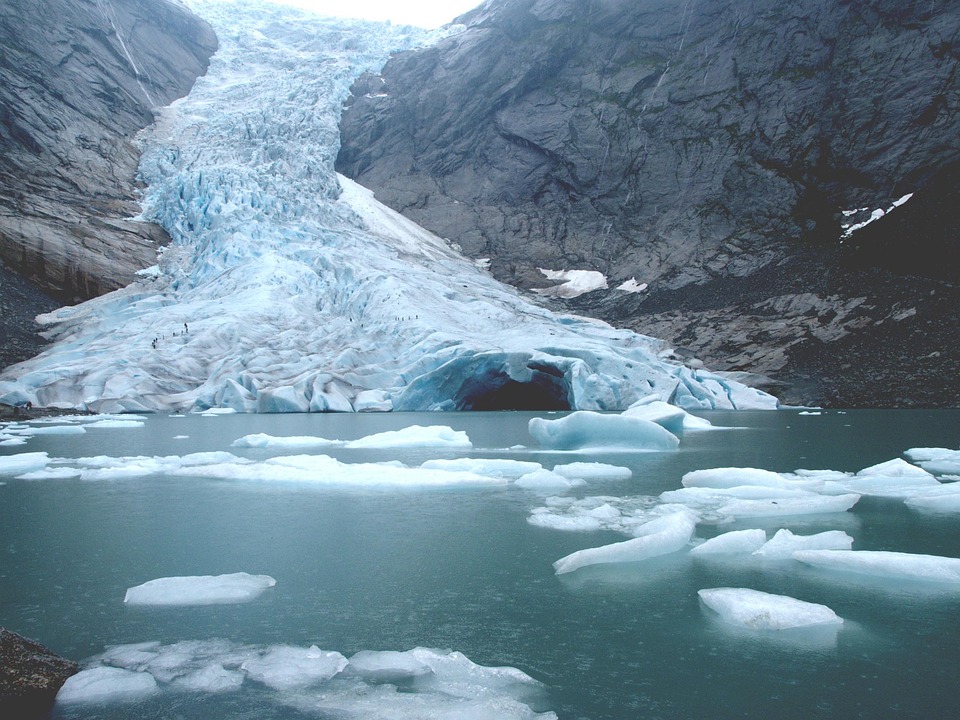
The Greenland Ice Sheet is massive and its melting is currently contributing significantly to global sea-level rise. Its melt also holds the potential to disrupt global ocean circulation patterns.
A. Surface Elevation Feedback: As the GIS melts, its surface gradually lowers in altitude. Since air temperature is naturally colder at higher altitudes, lowering the surface exposes the remaining ice to warmer air, which accelerates the melting—a strong and continuous positive feedback loop.
B. Albedo Effect: The melting also significantly reduces the ice sheet’s albedo (its surface reflectivity). Less white, reflective ice means more dark surface water or rock is exposed, absorbing much more solar energy and further accelerating warming and melting.
C. Atlantic Circulation Impact: The massive input of cold, low-density fresh meltwater from Greenland into the North Atlantic is a key factor implicated in the potential slowing or complete collapse of the Atlantic Meridional Overturning Circulation (AMOC), which would have severe climatic consequences.
D. Critical Temperature: Scientific consensus suggests that a sustained warming of between $1.0^\circ\text{C}$ and $3.0^\circ\text{C}$ above pre-industrial levels could be sufficient to initiate the long-term, irreversible collapse of the GIS.
Section 3: Ocean and Circulation Tipping Points
Ocean currents act as the Earth’s global heat conveyor belt. They distribute energy and moisture, profoundly influencing weather patterns across all continents. Their stability is critically threatened by global warming.
A. Atlantic Meridional Overturning Circulation (AMOC)
The AMOC is a large system of ocean currents that transports warm, tropical water northwards and cold, deep water southwards. It plays a vital role in regulating the climate, especially in the Northern Hemisphere.
A. Thermohaline Circulation: The AMOC is driven by density differences, specifically relating to temperature (thermo) and salinity (haline). Warm, salty surface water flows north, cools dramatically, and then becomes dense enough to sink deep into the North Atlantic, a process known as deep water formation.
B. Freshwater Disruption: Massive freshwater input from the melting Greenland Ice Sheet and increased high-latitude rainfall reduces the salinity and density of the North Atlantic surface water. This reduced density prevents the water from sinking, thereby directly slowing the AMOC’s circulation.
C. Consequences of Collapse: A complete shutdown of the AMOC would lead to rapid and significant cooling in Northern Europe and North America, massive disruption of monsoons in Africa and Asia, and potentially accelerate ice melt in the Southern Ocean due to shifting heat patterns.
D. Current State: Paleoclimate evidence shows that the AMOC has shut down abruptly in the past. Current observational data indicates a measurable weakening in recent decades, leading to urgent concerns about its proximity to a critical tipping point.
B. Ocean Anoxia
Warming and circulation changes can lead to widespread oxygen depletion in large parts of the ocean. This life-threatening condition is known as anoxia.
A. Oxygen Solubility: Warmer ocean water holds significantly less dissolved oxygen than colder water. As the ocean surface warms, its physical capacity to carry the oxygen necessary for marine life decreases dramatically.
B. Nutrient Cycling: Changes in ocean circulation (like an AMOC slowdown) can significantly reduce the mixing of oxygenated surface water with deep water. This creates stagnant deep layers. Combined with excessive nutrient runoff from land, this leads to vast, expanding dead zones where oxygen levels are zero.
C. Consequences for Life: Widespread anoxia would be catastrophic for the vast majority of marine life. It would severely impact global fisheries and could potentially trigger mass extinction events in the ocean, similar to events seen in Earth’s deep history.
D. Ocean Acidification: An accompanying ocean tipping element is acidification, where the ocean absorbs excessive atmospheric $\text{CO}_2$. This dramatically lowers $\text{pH}$ levels, threatening calcifying organisms like corals and shellfish and destabilizing marine food webs.
Section 4: Biosphere and Ecosystem Tipping Points
The Earth’s great biomes—massive, contiguous ecosystems—are themselves capable of sudden collapse. This collapse would release vast amounts of stored carbon and accelerate global warming significantly.
A. The Amazon Rainforest Dieback
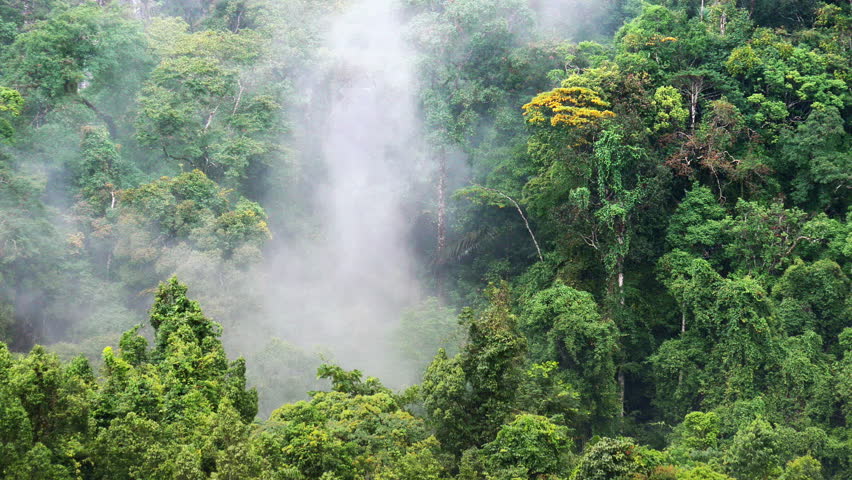
The Amazon rainforest is a global critical system due to its enormous biodiversity and its role as a crucial carbon sink and regulator of South American regional hydrology.
A. Drought and Deforestation: The tipping point for the Amazon is defined by excessive combined stress from aggressive deforestation and increasingly intense, widespread droughts driven by climate change.
B. Hydrological Feedback: The rainforest generates a significant portion of its own rainfall through the massive process of transpiration (water vapor release by trees). If deforestation passes a critical, unknown threshold, the loss of trees leads to dramatically less rainfall, causing the surrounding forest to dry out and eventually die. This is a powerful, self-reinforcing drying feedback loop.
C. Transition to Savannah: Crossing this threshold would cause large parts of the dense rainforest to flip rapidly into a dry, fire-prone savannah or degraded woodland ecosystem. This would release billions of tons of stored carbon into the atmosphere, greatly accelerating global warming on a global scale.
D. Critical Threshold: Estimates for the tipping point range widely, but many suggest it could be triggered once $20\%$to $40\%$ of the original forest area is lost to a combination of climate stress and human activity.
B. Boreal Forest Shift
The vast Boreal forests (or taiga) of the Northern Hemisphere, spanning Eurasia and North America, are also near a tipping point driven primarily by fire and destructive pests.
A. Fire Regime Change: Warming temperatures lead to significantly longer, hotter, and drier fire seasons in the Boreal zone. Increased fire frequency and intensity damage the forest’s inherent ability to regenerate, shifting the landscape towards open grasslands or deciduous forests.
B. Insect Infestations: Warmer, milder winters allow destructive insects, such as aggressive bark beetles, to survive in larger numbers. These insects kill trees across vast, often contiguous areas, making the forests even more susceptible to catastrophic, irreversible fire events.
C. Albedo Change: A rapid shift from the dark, sunlight-absorbing evergreen Boreal forest to lighter, snow-covered deciduous forest or grassland in winter would slightly increase surface albedo. While this may offer a small local cooling effect, the immense associated carbon release from fires remains a major global warming driver.
Section 5: Permafrost and Carbon Release Tipping Points
The high latitudes, characterized by vast expanses of permanently frozen ground (permafrost), hold ancient, frozen organic carbon. This represents a massive, volatile risk to the entire climate system.
A. Permafrost Thaw
Permafrost, particularly in Siberia, Alaska, and Canada, holds more carbon than is currently contained in the atmosphere. Its eventual thawing constitutes a major, irreversible tipping element.
A. Carbon Bomb Risk: As the permafrost thaws due to rising temperatures, the ancient organic matter within it begins to rapidly decompose. This decomposition releases powerful greenhouse gases, primarily carbon dioxide ($\text{CO}_2$) and methane ($\text{CH}_4$), into the atmosphere.
B. The Feedback Loop: Increased atmospheric $\text{CO}_2$ and $\text{CH}_4$ trap significantly more heat. This immediately leads to even greater warming, which in turn causes more permafrost to thaw—a classic, powerful, and relentless positive climate feedback loop.
C. Irreversible Release: Once thawing begins at scale across the vast Siberian and North American plains, it is practically impossible to stop. This massive, autonomous carbon release cannot be effectively controlled by human emissions reductions alone.
D. Hydrate Destabilization: Warming ocean water on continental shelves also threatens to destabilize frozen methane clathrates (or hydrates) locked in the seabed sediments. A massive, abrupt release of this deep-sea methane would represent an unparalleled, immediate climate catastrophe.
B. Cloud and Aerosol Effects
Less understood but potentially highly significant tipping points involve rapid changes in atmospheric components like clouds and reflective aerosols.
A. Stratocumulus Deck Instability: Leading researchers suggest that a specific, vital cloud layer, the vast stratocumulus decks over subtropical oceans, could suddenly disappear above a critical threshold of atmospheric $\text{CO}_2$concentration. Since these low clouds reflect a lot of incoming sunlight, their sudden disappearance would cause a rapid, additional jump in global temperature, potentially up to $8^\circ\text{C}$ in some models.
B. Aerosol Masking: Human industrial activity currently releases large amounts of reflective sulfate aerosols into the atmosphere. These aerosols act as a global “dimming” mask, temporarily offsetting some underlying warming. A rapid, coordinated cleanup of these pollutants would instantly reveal the full, unmasked warming effect, creating a sudden and significant temperature jump.
C. Feedbacks and Uncertainty: Cloud behavior remains one of the greatest sources of uncertainty in all current climate models. This means there could be other, still-unknown tipping points related to cloud cover, precipitation patterns, or atmospheric moisture dynamics.
D. Monsoon System Changes: The great Asian and African monsoon systems, which feed billions of people, also exhibit non-linear behavior. They could potentially shift abruptly under warming, leading to catastrophic changes in regional water availability and food security.
Conclusion: Navigating the Point of No Return

The concept of climate tipping points fundamentally changes our perception of the climate crisis. It moves the discussion from managing gradual change to avoiding absolute, catastrophic thresholds.
Tipping points are irreversible thresholds in the Earth’s climate system driven by powerful, self-sustaining positive feedback loops.
Crossing a tipping point means committing the planet to significant, unstoppable environmental change on human timescales.
The most urgent tipping points involve the great ice sheets, including the West Antarctic Ice Sheet (WAIS), which is susceptible to marine instability.
Melting ice and increased freshwater runoff threaten to slow or collapse the vital Atlantic Meridional Overturning Circulation (AMOC), drastically altering global weather patterns.
Major biomes, such as the Amazon rainforest, face thresholds where combined drought and deforestation could trigger a self-sustaining dieback into savannah.
The thawing of high-latitude permafrost poses the risk of a massive, autonomous release of ancient methane and carbon dioxide into the atmosphere.
These interconnected risks mean the collapse of one system could trigger a domino effect, pushing the entire climate system into a new, hotter state.
Avoiding these irreversible shifts requires immediate and drastic emissions cuts to maintain a crucial safety margin well below the projected critical thresholds.