
Introduction: The Vast, Untapped Energy Beneath Our Feet
For centuries, humanity has sought sustainable and powerful sources of energy to drive civilization’s progress, often looking outward to the sun, wind, or rushing rivers. Yet, beneath the ground we walk on lies an immense, often overlooked reservoir of thermal energy: the Earth’s internal heat. This geothermal energy originates from the continuous slow decay of radioactive isotopes within the Earth’s mantle and core, a process that has been steadily generating heat since the planet’s formation billions of years ago. Unlike intermittent sources like solar or wind power, this subsurface heat is constantly available, offering a reliable, baseload source of renewable power that is largely independent of weather conditions or time of day. Tapping into this subterranean furnace presents a profound opportunity to diversify our energy portfolio and drastically reduce our reliance on fossil fuels.
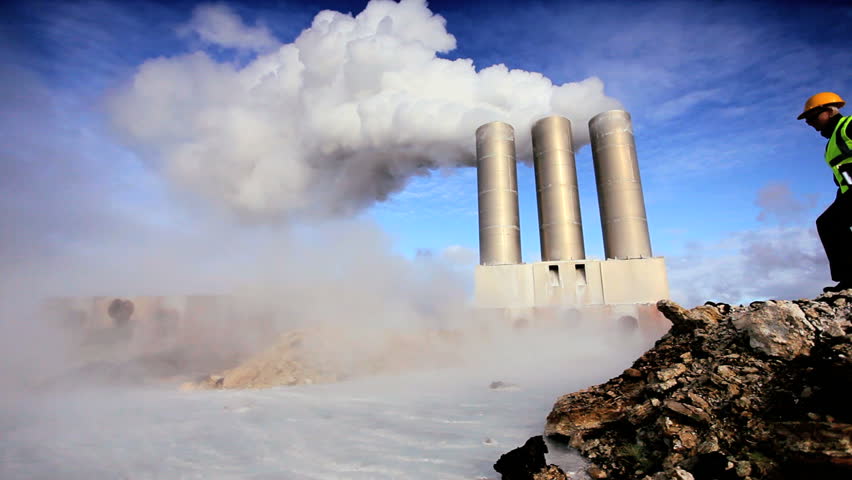
The concept of using Earth’s internal heat is not entirely new; ancient civilizations used geothermal springs for bathing and heating, but harnessing it for industrial-scale electricity generation is a relatively recent technological feat. Modern geothermal power plants capture the steam and hot water that naturally rise to the surface in geologically active areas, converting that thermal energy directly into mechanical energy, and subsequently into electricity. This process is inherently clean, producing only minimal greenhouse gas emissions, often just steam or trace gases that are reinjected back into the earth.
Despite its obvious benefits—reliability, minimal land footprint, and low emissions—geothermal energy currently accounts for only a tiny fraction of global electricity production. The primary hurdles lie in the specialized geological requirements and the high upfront costs of drilling deep into the Earth’s crust to access high-temperature resources. However, technological advancements, particularly in drilling techniques and in developing Enhanced Geothermal Systems (EGS), are rapidly expanding the geographical feasibility of this power source. This comprehensive exploration will delve into the physics of Earth’s internal heat, detail the different technologies used to convert this heat into usable energy, examine the environmental benefits and challenges, and discuss the promising future of deep geothermal innovation.
Section 1: The Geological Basis of Geothermal Energy
To understand how to harness geothermal energy, one must first grasp the physical processes that generate and transport heat within the Earth.
A. Sources of Internal Heat
The Earth’s core and mantle are incredibly hot, maintained by ongoing geological processes.
A. Radiogenic Heat: The majority of the Earth’s internal heat is radiogenic heat. This is continuously generated by the slow, natural radioactive decay of long-lived isotopes, such as uranium-238, thorium-232, and potassium-40, found primarily within the mantle and crust.
B. Primordial Heat: A significant portion of the heat is also primordial heat, residual heat left over from the massive accretion of the Earth during its formation approximately $4.5$ billion years ago. This heat has been slowly leaking out ever since.
C. Core Temperatures: The Earth’s inner core is estimated to reach temperatures comparable to the surface of the sun, exceeding $5,000^\circ \text{C}$. This heat is constantly being transferred outward through the subsequent layers.
D. The Geothermal Gradient: Moving downward from the surface, the temperature increases steadily. This rate of temperature increase is called the geothermal gradient, which averages about $25^\circ \text{C}$ to $30^\circ \text{C}$per kilometer depth globally.
B. Role of Plate Tectonics
Geothermal resources are not distributed uniformly across the globe. They are concentrated in areas of high geological activity.
A. Plate Boundaries: The highest-temperature geothermal resources are typically located near tectonic plate boundaries. These boundaries are characterized by volcanic activity, frequent earthquakes, and thinner crust.
B. Magma Intrusions: In these active zones, large bodies of molten rock (magma) often intrude into the shallower crust. These magma chambers act as immense, subterranean heat exchangers, heating nearby groundwater to high temperatures.
C. Permeability and Fractures: An ideal geothermal reservoir requires not only high temperature but also permeability—the presence of porous rock and natural fractures that allow water to circulate and carry the heat upward toward the drilling sites.
D. Hydrothermal Systems: The resulting high-temperature reservoirs where hot water and steam accumulate beneath the surface are known as hydrothermal systems. These are the primary targets for conventional geothermal power generation.
Section 2: Conventional Geothermal Power Technologies
Modern geothermal power generation involves several distinct technologies, all designed to convert thermal energy from underground reservoirs into electricity.
A. Dry Steam Power Plants
Dry steam plants are the oldest and simplest form of geothermal power generation, utilizing naturally occurring, high-pressure steam.
A. Direct Steam Use: In these plants, superheated steam rises directly from the geothermal reservoir through a production well. The steam is piped straight to a turbine.
B. Spinning the Generator: The pressure and kinetic energy of the steam cause the turbine blades to rotate rapidly. This rotation drives an electrical generator to produce power.
C. Low Emissions: These plants emit minimal gases, largely consisting of water vapor. Any non-condensable gases, such as hydrogen sulfide, are often removed before release or reinjected.
D. Geographic Limitation: Dry steam reservoirs are exceedingly rare. Only a few locations globally, such as The Geysers in California, have suitable conditions for this type of plant.
B. Flash Steam Power Plants
Flash steam plants are the most common type of geothermal facility today, relying on extremely hot pressurized water.
A. Hot Water Extraction: High-pressure, hot water (often exceeding $182^\circ \text{C}$) is pumped from the deep reservoir.
B. The Flashing Process: As this pressurized water is quickly brought to the surface, the pressure suddenly drops. This causes a fraction of the hot water to instantaneously vaporize, or “flash,” into steam.
C. Two-Stage System: The resulting steam then drives the turbine. The remaining hot water is often used in a second flash stage to extract more energy before the cooled brine is pumped back into the ground for reheating.
D. Reinjection and Sustainability: The critical step of reinjection ensures the sustainability of the resource. It maintains reservoir pressure and replenishes the water supply, turning the process into a closed, continuous loop.
C. Binary Cycle Power Plants
Binary cycle plants can utilize lower-temperature resources and are the fastest-growing sector of the geothermal industry.
A. Heat Exchanger: This system does not use the geothermal fluid (water/brine) directly to spin the turbine. Instead, the geothermal fluid is passed through a heat exchanger.
B. Working Fluid: The geothermal heat is transferred to a second, separate fluid called the working fluid. This fluid has a much lower boiling point than water (often an organic compound like isobutane or pentane).
C. Closed Loop: The heated working fluid vaporizes into a high-pressure gas, which then spins the turbine. Because both the geothermal fluid loop and the working fluid loop are closed, no gases are released into the atmosphere during operation.
D. Wider Applicability: Binary plants can efficiently use resources with temperatures as low as $107^\circ \text{C}$, dramatically expanding the number of sites where geothermal power can be economically generated.
Section 3: The Frontier of Enhanced Geothermal Systems (EGS)
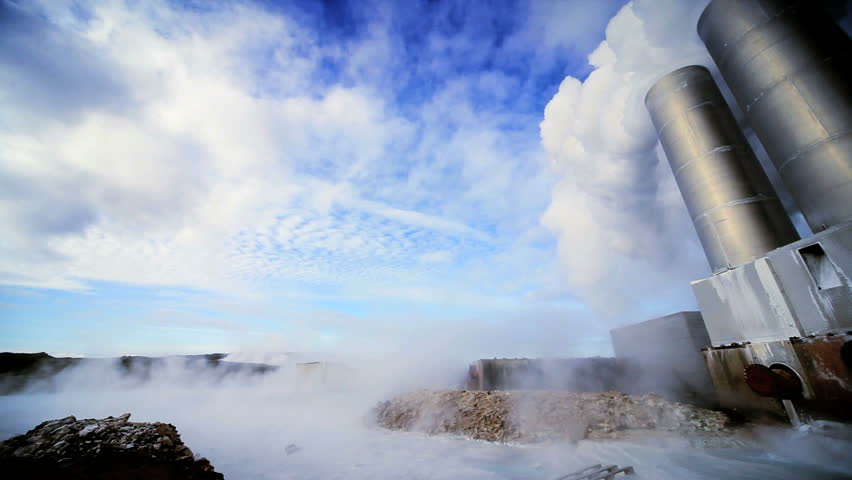
The development of Enhanced Geothermal Systems (EGS) aims to decouple geothermal power generation from the strict requirements of naturally permeable hydrothermal reservoirs.
A. EGS Concept and Mechanism
EGS technology seeks to replicate the ideal conditions of a natural geothermal reservoir in geologically suitable, but dry, hot rock.
A. Deep Drilling: EGS targets are typically deep reservoirs of hot, dry rock that lack the natural fractures and water required for conventional methods. Drilling often extends to depths of $3$ to $5$ kilometers or more.
B. Hydraulic Stimulation: Once the well is drilled into the hot rock, cold water is injected under high pressure. This process, similar to hydraulic fracturing in oil and gas, creates and enlarges an interconnected network of artificial fractures in the rock.
C. Heat Exchanger Creation: This fractured network then acts as an immense, subterranean heat exchanger. Water is pumped down one well (the injection well), flows through the hot rock fractures, and is heated to high temperatures.
D. Production Well: The superheated water is then brought back to the surface via a second well (the production well) to run a standard binary or flash power plant.
B. EGS Challenges and Potential
While EGS promises to unlock vast global energy reserves, it faces significant technical and public perception hurdles.
A. Induced Seismicity: The high-pressure injection of water used to create the fracture network can sometimes trigger small, localized earthquakes. Managing this induced seismicity is a primary technical challenge and a regulatory concern.
B. High Upfront Cost: The initial cost of deep drilling and reservoir creation is substantially higher than conventional geothermal projects, requiring significant capital investment and risk mitigation.
C. Massive Resource Base: Despite the challenges, the potential is enormous. EGS could theoretically access geothermal resources everywhere, vastly exceeding the energy contained in all global oil, gas, and coal reserves combined.
D. Unlocking Global Potential: Successful, economic EGS deployment would effectively transform geothermal energy from a localized, niche power source into a widespread, major component of the global baseload power grid.
Section 4: Environmental and Sustainability Profile
Geothermal power offers one of the smallest environmental footprints among all baseload energy technologies, but it is not entirely without environmental considerations.
A. Low Environmental Impact
Geothermal power’s operational phase is defined by its minimal physical and atmospheric intrusion.
A. Minimal Land Footprint: Geothermal power plants require relatively small parcels of land compared to massive solar farms or large wind installations, making them efficient users of land area.
B. Lowest $\text{CO}_2$ Emissions: Compared to coal or natural gas, the $\text{CO}_2$ emissions from a geothermal binary plant are near zero. Even flash plants release only trace amounts of non-condensable gases, typically less than $5\%$ of a fossil fuel plant’s emissions.
C. Water Efficiency: Modern closed-loop binary systems are highly water-efficient and do not consume water in the same quantities as thermoelectric plants (which require vast amounts of water for cooling towers).
D. Closed-Loop System: The reinjection of cooled brine ensures that the process maintains the Earth’s natural water balance. This also prevents the release of heavy metals or dissolved solids found naturally in the geothermal fluid.
B. Sustainability and Geothermal Lifespan
While classified as renewable, the sustainable operation of a geothermal reservoir requires careful management.
A. Reservoir Depletion: If hot fluid is extracted too quickly without sufficient reinjection, the reservoir temperature or pressure can drop, leading to reservoir depletion. This diminishes the plant’s power output over time.
B. Long-Term Management: True sustainability requires long-term reservoir management that balances the rate of heat extraction with the natural rate of heat recharge from the surrounding hot rock.
C. Mineral Scaling: The hot brine often contains dissolved minerals and salts. These can precipitate out and cause scaling (clogging) in pipes and wells, requiring periodic maintenance and chemical treatment.
D. Micro-seismicity: While EGS carries the main risk of induced seismicity, even conventional geothermal operations can sometimes trigger minor, non-damaging micro-seismic events due to fluid withdrawal and injection.
Section 5: Global Applications and Direct Use
Beyond electricity generation, geothermal heat has significant non-power applications, contributing to energy efficiency in various sectors.
A. Direct Use Applications
Geothermal heat can be used directly for heating processes without converting it into electricity, which is highly efficient.
A. District Heating: In countries like Iceland and France, geothermal water is pumped directly to heat exchangers to provide district heating for homes, municipal buildings, and businesses across entire cities.
B. Agricultural Use: Direct geothermal heat is widely used for warming greenhouses in cold climates. This allows for year-round cultivation of fruits and vegetables, reducing import reliance.
C. Industrial Processes: Low-temperature geothermal resources can provide heat for various industrial processes, including drying lumber, pasteurizing milk, and providing heat for aquaculture (fish farming).
D. Therapeutic Uses: The oldest form of geothermal use—thermal bathing and spa resorts—remains popular worldwide, utilizing the natural heat and mineral content of hot springs.
B. Geothermal Heat Pumps (GHPs)
Geothermal Heat Pumps utilize the stable, moderate temperature of the shallow ground (typically $10^\circ \text{C}$ to $15^\circ \text{C}$) to provide highly efficient heating and cooling for individual buildings.
A. Ground Loop System: GHPs use a network of buried pipes (the ground loop) containing a fluid. In winter, the fluid absorbs heat from the ground and transfers it to the building.
B. Refrigeration Cycle Reversal: In summer, the system reverses, absorbing excess heat from the building and efficiently dumping it back into the cooler earth, acting as a highly efficient air conditioner.
C. High Efficiency: GHPs are renowned for their high efficiency, often delivering three to five units of heating or cooling energy for every one unit of electrical energy consumed.
D. Global Deployment: The use of GHPs is growing rapidly globally, demonstrating that the vast majority of the Earth’s surface can be used to harvest stable, low-grade geothermal energy for decentralized thermal needs.
Conclusion: Securing a Geothermal Future
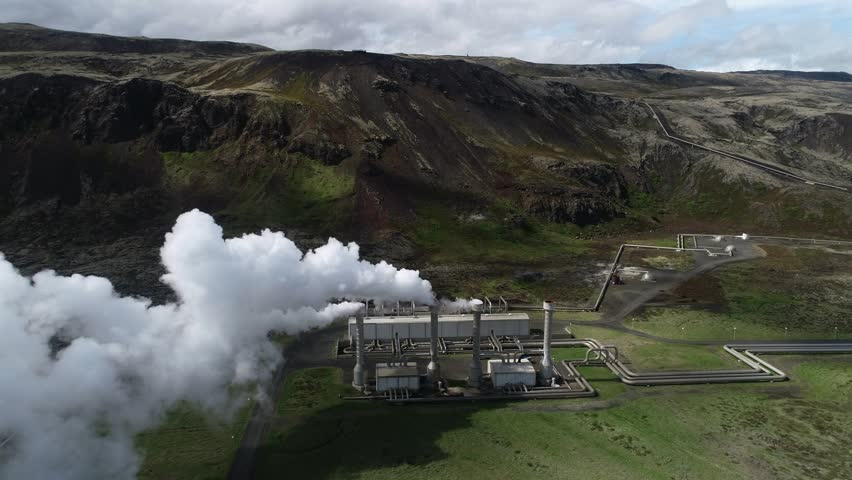
Geothermal energy, sourced from the Earth’s perpetually hot interior, provides a powerful and unique solution to the global need for clean, reliable baseload power. It offers unmatched independence from weather cycles.
The heat originates from both radiogenic decay within the crust and primordial heat left from the planet’s formation.
Conventional power relies on hydrothermal systems found near tectonic plate boundaries where magma heats circulating groundwater.
The three main technologies are dry steam (rarest), flash steam (most common), and the more versatile binary cycle(most common for low temperatures).
The crucial technology for expanding access is Enhanced Geothermal Systems (EGS), which artificially fracture hot, dry rock to create heat exchangers.
EGS holds the potential to unlock a massive energy resource base, but it faces challenges related to induced seismicityand high upfront drilling costs.
Geothermal power offers one of the lowest $\text{CO}_2$ emission profiles and a minimal land footprint compared to fossil fuels.
Sustainability requires careful reservoir management through continuous reinjection to balance heat extraction and natural recharge.
Beyond electricity, geothermal heat is highly valuable for direct use in district heating, agriculture, and industrial processes.
The rapid deployment of Geothermal Heat Pumps (GHPs) demonstrates the efficiency of utilizing shallow ground stability for highly efficient building heating and cooling globally.