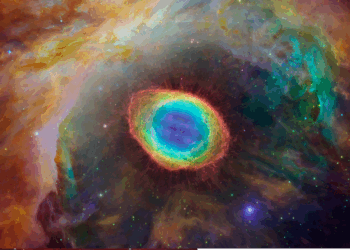

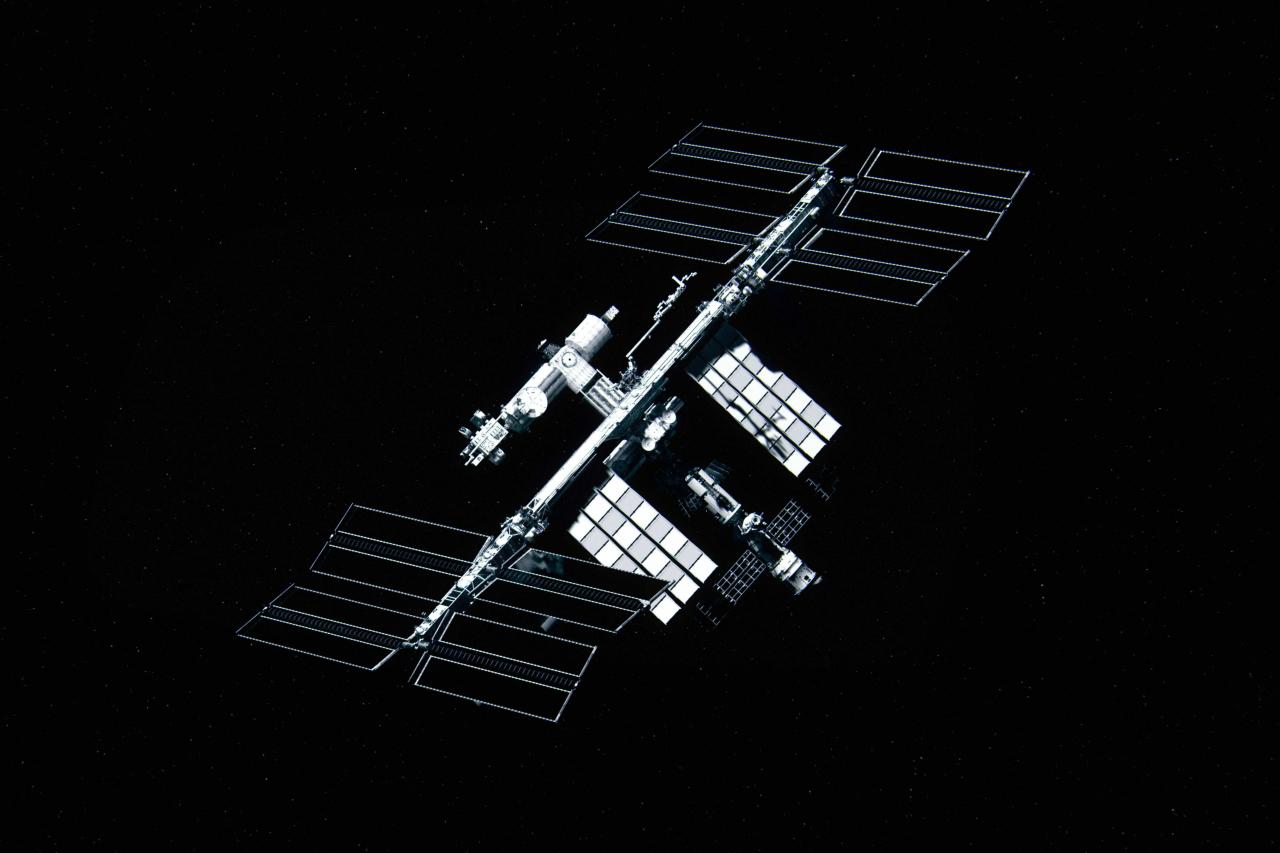
The exploration of the distant cosmos represents the ultimate frontier of human knowledge, requiring a sophisticated fusion of physics, engineering, and digital innovation. For centuries, our understanding of the universe was limited by the optical constraints of ground-based lenses and the blurring effects of the Earth’s atmosphere. However, we have entered a transformative era where next-generation sensors and orbital platforms are peeling back the curtain on the early universe.
This technological leap allows us to observe the first stars forming in the dark ages of space and to analyze the chemical compositions of atmospheres on planets orbiting other suns. As a passionate space explorer and cosmic storyteller, she believes that these advanced observation tools are more than just hardware; they are the eyes through which humanity searches for its place in the infinite.
By integrating high-resolution spectroscopy with adaptive optics, we are now capable of detecting gravitational ripples and invisible dark matter structures. This guide provides a comprehensive look at the groundbreaking technologies that are currently redefining our boundaries of sight and scientific discovery across the deep space landscape. It is an invitation to understand the incredible machinery that turns faint photons from billions of years ago into the breathtaking data that shapes our modern reality.
The Evolution of Orbital Infrared Observatories
Observing deep space requires moving beyond the visible spectrum to see through the thick clouds of cosmic dust that hide star-forming regions. Infrared technology is the primary tool for this task, as it detects the heat signatures of distant objects that would otherwise remain invisible. These observatories must be cooled to extremely low temperatures to prevent their own heat from interfering with the sensitive data they collect.
A. Implementing Advanced Cryogenic Cooling Systems
B. Utilizing Large Scale Beryllium Mirror Arrays
C. Developing High Sensitivity Mid Infrared Instruments
D. Deploying Sunshields for Thermal Radiation Protection
E. Enhancing Fine Guidance Sensors for Pointing Accuracy
These instruments allow us to see the redshifted light from the most distant galaxies in the known universe. By capturing this ancient light, scientists can effectively look back in time to the moments immediately following the Big Bang. The precision required to maintain the alignment of these mirrors in the vacuum of space is one of the greatest engineering feats in history.
Adaptive Optics and Ground Based Enhancements
While space telescopes offer clear views, massive ground-based observatories remain essential due to their ability to house much larger mirrors. The primary challenge for ground-based astronomy is atmospheric turbulence, which causes the twinkling effect that blurs high-resolution images. Adaptive optics technology solves this by using deformable mirrors that change shape hundreds of times per second to cancel out atmospheric distortion.
A. Utilizing Laser Guide Star Atmospheric Probing
B. Developing High Speed Deformable Mirror Actuators
C. Implementing Real Time Wavefront Sensing Algorithms
D. Integrating Multi Conjugate Adaptive Optics Systems
E. Maximizing Light Collection via Segmented Mirror Designs
This technology allows a telescope on a mountain in Chile or Hawaii to achieve a resolution comparable to a telescope in orbit. By constantly adjusting the mirror’s surface, astronomers can resolve the tiny details of binary star systems or the disks of dust around young stars. These ground-based systems are the workhorses of deep space observation, providing the massive amounts of data needed for statistical cosmic surveys.
High Resolution Spectroscopy and Chemical Analysis
Seeing a distant object is only the first step; understanding what it is made of requires the power of high-resolution spectroscopy. This technology breaks down the light from a star or galaxy into its constituent colors, revealing a fingerprint of the chemical elements present. Modern spectrometers can detect the presence of water, methane, and oxygen on exoplanets millions of light-years away.
A. Developing Echelle Spectrographs for High Precision
B. Utilizing Fiber Fed Light Collection Systems
C. Analyzing Atomic Transition Lines in Distant Gazes
D. Measuring Radial Velocity for Exoplanet Discovery
E. Implementing Automated Data Reduction Pipelines
By studying these spectral lines, astrophysicists can determine the temperature, pressure, and chemical history of distant celestial bodies. This is our primary method for searching for biosignatures, or signs of life, beyond our solar system. The sensitivity of modern spectrometers has reached a point where we can detect the slight wobble of a star caused by the gravity of an orbiting planet.
Radio Astronomy and Interferometry Arrays
Some of the most violent and energetic events in the universe do not emit much visible light but are incredibly bright in radio waves. Radio astronomy allows us to observe black holes, pulsars, and the cold gas clouds that serve as the nurseries for new stars. By linking multiple radio dishes across continents, scientists can create a virtual telescope as large as the Earth itself.
A. Implementing Very Long Baseline Interferometry Techniques
B. Developing Cryogenically Cooled Radio Receivers
C. Utilizing High Speed Digital Signal Processing
D. Building Large Scale Phased Array Feeds
E. Mapping the Cosmic Microwave Background Radiation
This technique, known as interferometry, was used to capture the first-ever image of a black hole’s event horizon. The sheer volume of data produced by these arrays is so massive that it often exceeds the capacity of the internet, requiring physical hard drives to be shipped to central processing centers. Radio astronomy provides a unique window into the invisible universe that optical telescopes simply cannot see.
Gravitational Wave Detectors and Spacetime Ripples
A revolutionary new way to observe the universe involves detecting ripples in the fabric of spacetime itself, known as gravitational waves. Unlike light-based astronomy, gravitational wave detectors use ultra-precise lasers to measure the minute changes in distance caused by colliding black holes or neutron stars. This technology has opened a listening post for the universe, allowing us to perceive events that emit no light at all.
A. Utilizing Laser Interferometer Gravitational Wave Observatories
B. Implementing Ultra High Vacuum Beam Tubes
C. Developing Advanced Seismic Isolation Systems
D. Enhancing Photon Shot Noise Reduction Techniques
E. Correlating Multi Messenger Astronomy Events
When a gravitational wave is detected, it triggers an alert for optical telescopes around the world to search for a corresponding flash of light. This multi-messenger approach provides a complete picture of the most cataclysmic events in the cosmos. These detectors are so sensitive they can measure a change in distance smaller than the width of an atomic nucleus.
High Energy X-Ray and Gamma Ray Sensors
The most extreme environments in the universe, such as the areas surrounding black holes and supernova remnants, emit high-energy X-rays and gamma rays. These rays cannot penetrate the Earth’s atmosphere, making space-based high-energy sensors vital for modern astrophysics. Unlike optical mirrors, X-ray telescopes use grazing incidence optics to gently reflect high-energy particles toward a detector.
A. Developing Nested Grazing Incidence Mirror Shells
B. Utilizing Cadmium Zinc Telluride Imaging Sensors
C. Implementing High Resolution Microcalorimeters
D. Tracking Gamma Ray Bursts via Wide Field Monitors
E. Analyzing Synchrotron Radiation from Pulsar Winds
These sensors allow us to map the distribution of hot gas in galaxy clusters, which are the largest structures in the universe. By observing the high-energy universe, we can study the fundamental laws of physics under conditions of extreme gravity and temperature that could never be replicated on Earth.
Big Data and Machine Learning in Sky Surveys
The current generation of telescopes produces petabytes of data every single night, far more than any human team could ever analyze. Machine learning and artificial intelligence are now essential technologies for deep space observation, helping to identify rare phenomena among millions of ordinary stars. These algorithms can find the dim flicker of a transiting planet or the strange light curve of a distant supernova in real-time.
A. Implementing Convolutional Neural Networks for Image Recognition
B. Utilizing Automated Transient Detection Systems
C. Developing Large Scale Data Archiving Solutions
D. Training Algorithms for Galaxy Classification
E. Managing Citizen Science Platforms for Data Analysis
Artificial intelligence is not just analyzing data; it is helping to decide where telescopes should point next. By automating the discovery process, we are finding new objects at a rate that was previously impossible. This digital infrastructure is the bridge between the raw light captured by a mirror and the scientific paper that changes our understanding of the world.
Future Solutions in Space Based Interferometry
The next frontier of observation involves placing multiple telescopes in a specific formation in deep space to work as a single unit. By flying telescopes millions of miles apart and syncing their data, we can create an instrument with the resolution to see the surfaces of distant stars. These interferometer swarms represent the future of our search for another Earth-sized planet.
A. Developing Precision Formation Flying Technology
B. Utilizing Laser Metrology for Sub Millimeter Alignment
C. Implementing Autonomous Spacecraft Navigation
D. Building Modular and Scalable Space Observatories
E. Enhancing Deep Space Communication Data Rates
The engineering challenges for these missions are immense, requiring nanometer-level precision over thousands of kilometers. However, the reward would be the first direct images of Exo-Earths and their continents. This technology will eventually allow us to see the light of cities on distant worlds, should they exist.
Conclusion
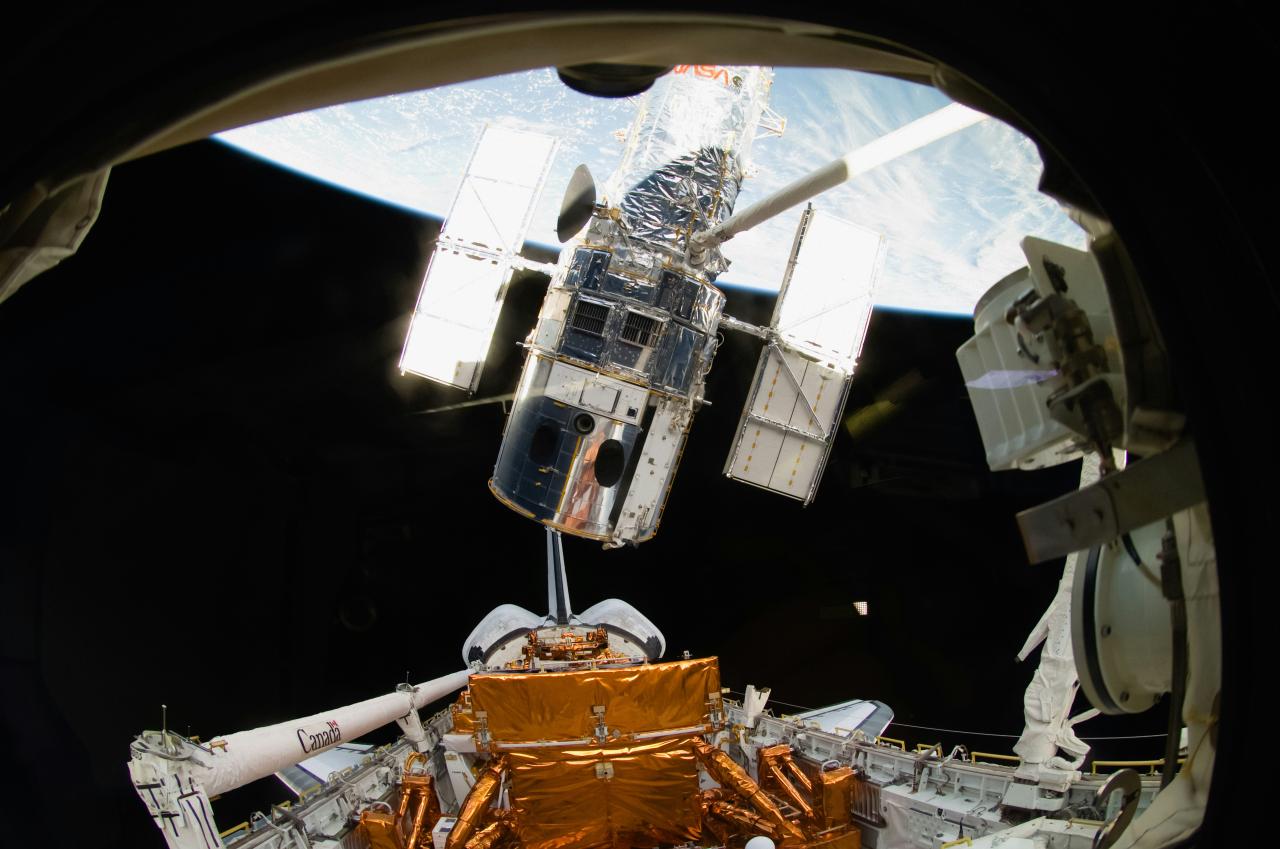
The advancement of deep space observation technology is a testament to human ingenuity and our endless desire to explore. Modern astrophysics relies on a multi-wavelength approach to capture the full story of the universe’s evolution. Space-based infrared telescopes allow us to peer through cosmic dust and see the very first stars. Adaptive optics have revolutionized ground-based astronomy by removing the blurring effects of the atmosphere.
Spectroscopy remains our most powerful tool for analyzing the chemical makeup of distant planets. Radio interferometry has turned our entire planet into a giant ear for listening to the cosmos. Gravitational wave detection has added a sense of touch to our repertoire of astronomical senses. High-energy sensors provide a window into the most violent and extreme environments in space. Artificial intelligence is now the primary driver for discovering new phenomena in massive data sets. The future of the field lies in the deployment of precision formation-flying telescope swarms in deep space. Each new technological breakthrough brings us one step closer to answering the fundamental question of our existence.